It’s the beginning of 1975, and Stelio Belletti has officially been working as a bicycle frame builder under the Stelbel brand for less than two years, in his workshop in Rodano, just outside Milan. His method of constructing frames with TIG welding sparks curiosity, and although some are still skeptical about making bicycles without lugged joints, his creations are admired by enthusiasts and professionals alike for their lightness, rigidity, and reliability—qualities that are ideal even in competitive cycling. But this is a matter for cycling connoisseurs: production is still—and will always remain—refined, meticulous, and even somewhat limited.
At the same time, but a thousand kilometers away, the Polish Cycling Federation is looking for a frame manufacturer.
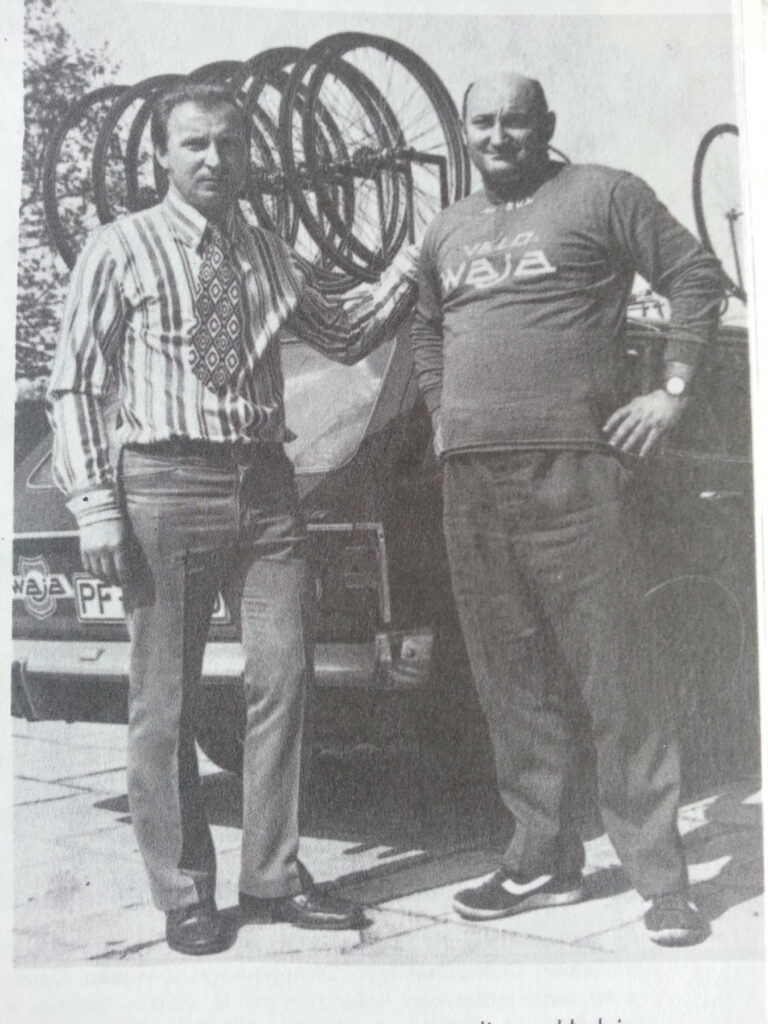
The president of the Polish Cycling Federation, Włodzimierz Gołębiewski, and the vice-president, Henryk Róźycki, summon the federation’s mechanic, Osvaldo Cazzaniga (who had his workshop in Gorgonzola and would later go on to found the OSCA brand), asking him to find the best frames in the world.
Cazzaniga takes on the challenge, jumps into his massive station wagon, and heads straight to Italy, arriving at the Stelbel workshop: “Stelio, I’m told your frames are outstanding! I’d like to commission a series for my riders: we’re aiming for the World Championships in Belgium.”
It’s worth remembering that, in those glorious days, road races were dominated by the Belgians—Merckx, Maertens, De Vlaeminck—who wanted to shine on their home turf. But the team time trial belonged to the Eastern European squads, who “pulled” like trains: the Soviet Union, East Germany, Czechoslovakia, and Poland, of course.
Belletti, calm by nature, thinks it over: his company is still in its early stages, time is short, and the risk is high. But—what the heck!—he has never backed down from a challenge. Confident in his skill and inspired by the media exposure that such an event could bring to Stelbel, he accepts and immediately gets to work, producing the requested frames in a very short time.

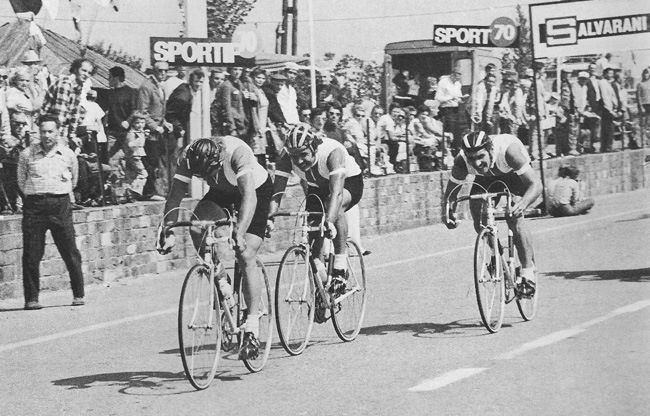
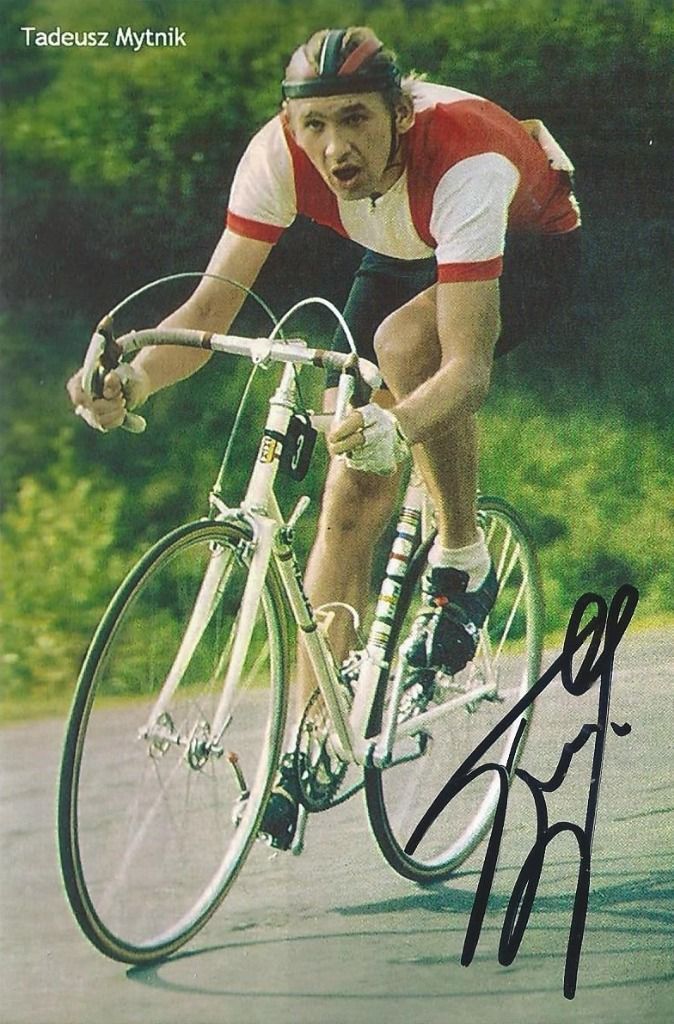
We arrive at August 27, 1975. In the town of Yvoir (which, together with Mettet, hosts the competition), the riders Tadeusz Mytnik, Mieczysław Nowicki, Ryszard Szurkowski, and Stanislas Szozda line up at the start on Stelbel bicycles, ready for the team time trial.
Their white and red Integrale models, with a custom-built fork and dropouts welded directly onto the rear horizontal stays, stand out among a multitude of other bikes and draw the attention of fans and competitors alike. Ahead of them lie 100 km of road, winding through the countryside, among cultivated fields and gentle slopes.


