
Carbon is not the material we handle every day. The workshop runs on steel, stainless steel and titanium, and TIG welding is the method this marque was built on. Moving towards composites took time, discarded prototypes and the input of the specialists who guide us on that ground.
With the fourth iteration of the Evoluzione road fork that process delivered something we consider settled: a shape that sits properly alongside the lines of our frames and, technically, a component we now know from the inside. Successive generations left behind data, corrections and a clearer sense of what any given change does to the behaviour of the front end.
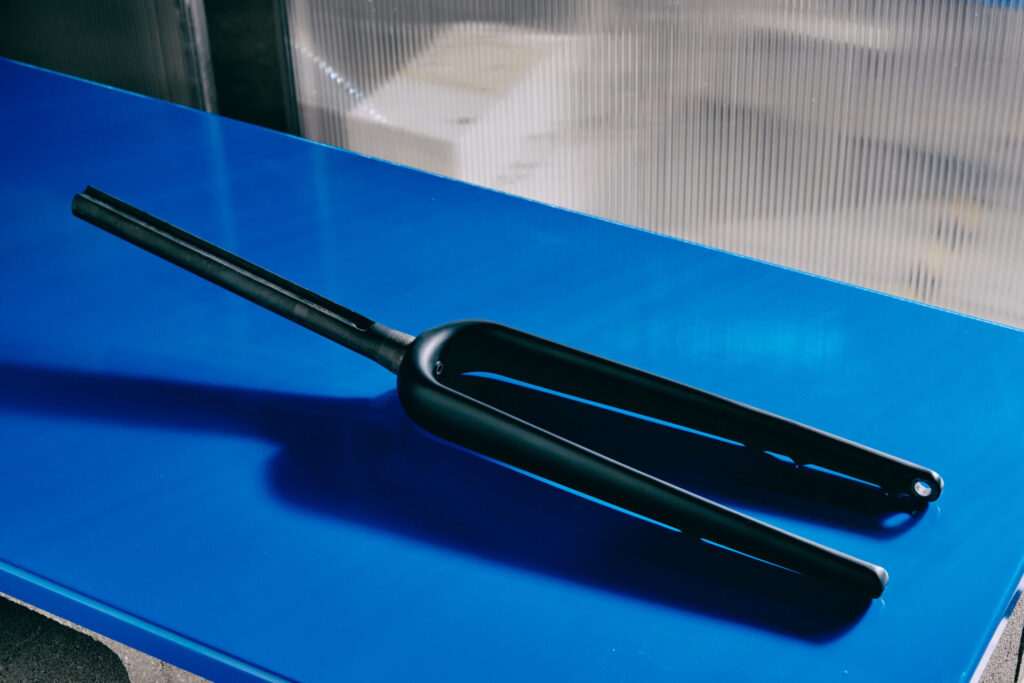
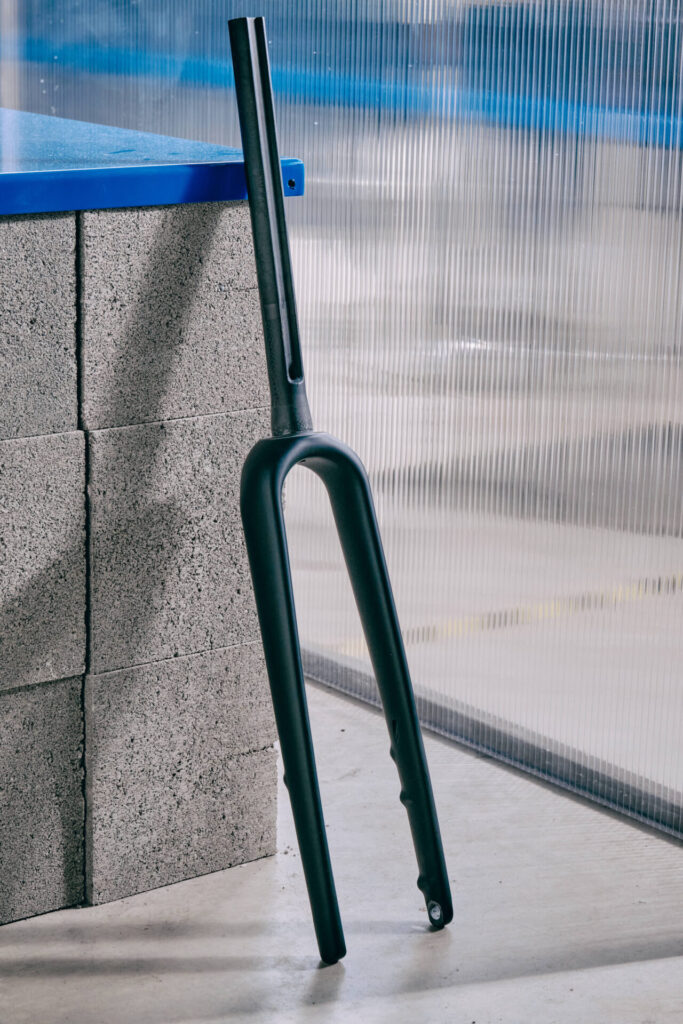
On that basis we decided to invest again — no small commitment for a workshop of our size — in a fork drawn from the outset for gravel. Official release is expected around November 2026, once testing is complete. Several specifications are already fixed, though, and we are sharing them now so that anyone considering a Stelbel gravel build knows in advance which fork they will be able to run.
There is no official name yet. In house we call it the Gravel Evoluzione, which states plainly where it comes from; around the workshop, though, it has already been shortened to Grevo, which states nothing at all but entered the vocabulary before anyone decided on it. Which of the two reaches the launch, we don’t yet know.
Visually we have not strayed far. The reception given to the Evoluzione pushed us towards a close relation, working in the same formal vocabulary: simple, clean, unfussy lines. The numbers, on the other hand, belong to this project alone. Official tyre clearance is 700x50c, axle-to-crown 390mm, rake 52mm.
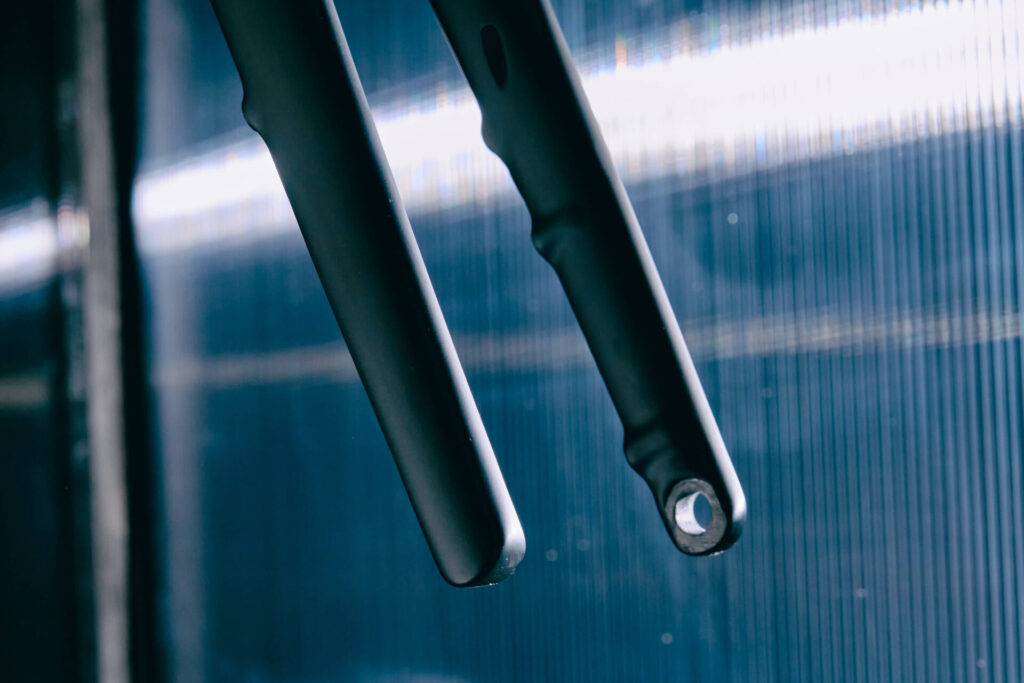
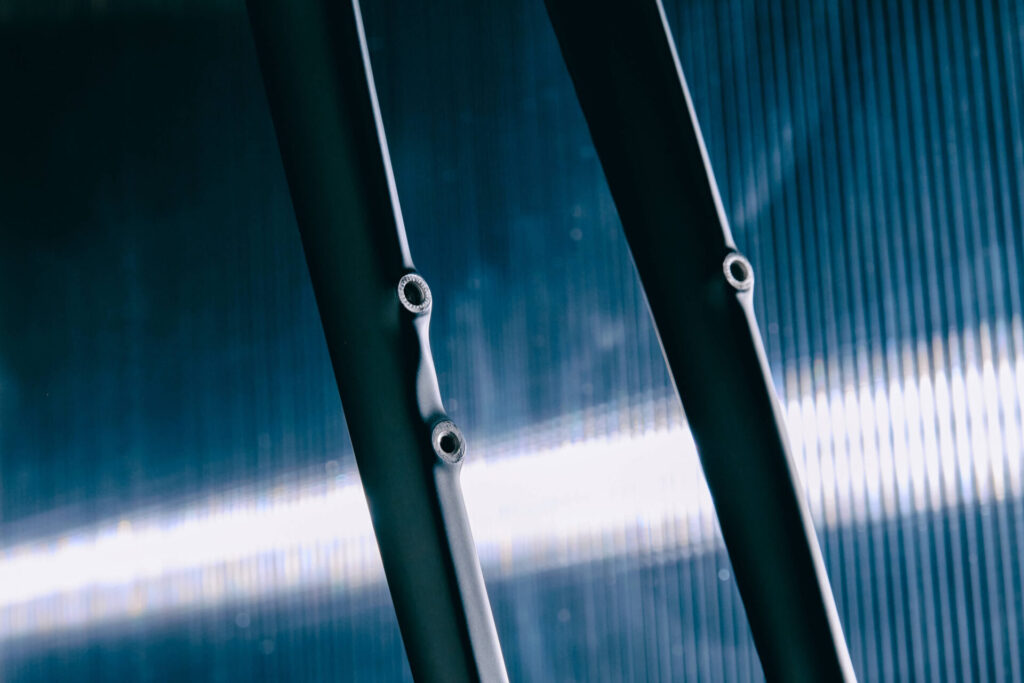
Tyre clearance is worth stating carefully, because the size printed on a sidewall only tells half the story: real width depends on the rim a tyre is mounted to, and the same 50c can measure a few millimetres either side of its label depending on internal rim width. Our working figure is therefore 52mm of actual measured width — in practice a 700x50c on today’s more common rim widths, which covers the majority of gravel tyres in use. There is also provision for a mudguard, with clearance in that configuration remaining at 45mm.
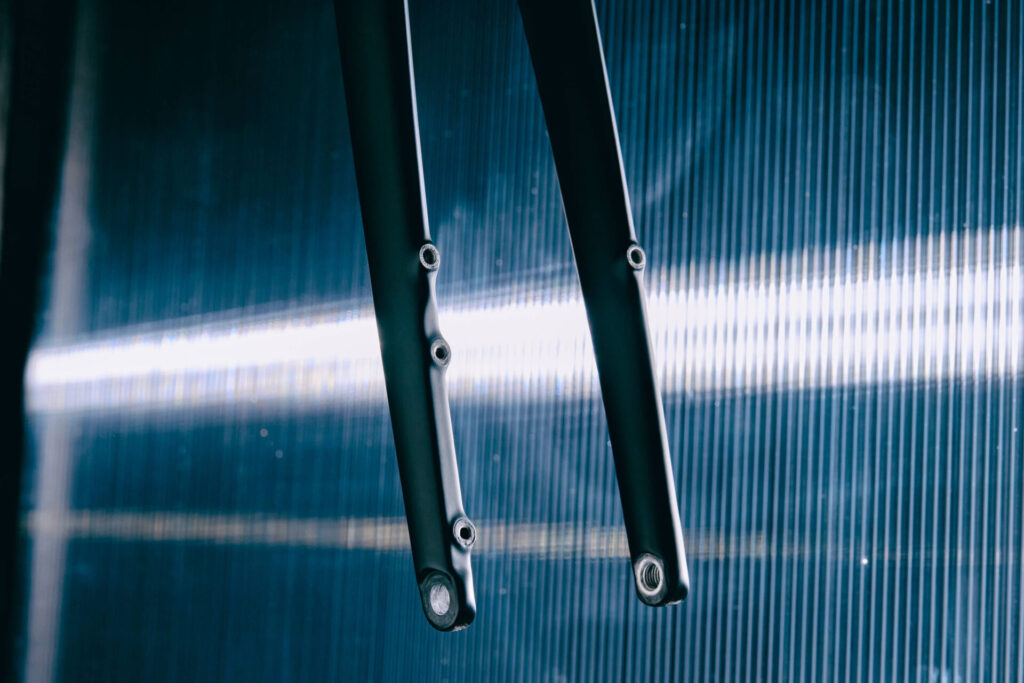
The steerer is tapered, with a 1 1/4in lower bearing. That runs against a market now dominated by fork crowns built around 1 1/2in. Our reading is that the shift of recent years answers the practical demands of internal cable routing more than it delivers any demonstrable gain in handling or ride feel. Bigger is not automatically better, and we have dug our heels in here: keeping a lower bearing diameter below the current standard changes the way the front end responds, and in our own testing the difference is there to be felt.
The steerer also uses a D-shaped section — a circle with a portion taken out of it — to which we have added two ribs. They reinforce the profile and at the same time recover part of the circumference the D removes, bringing the section back closer to a full circle. Two things follow. The first is a stiffer steerer. The second is a larger clamping surface, with more contact area and therefore more friction where the stem grips: less scope for slipping, and more consistent headset preload over time.

The fork will pair with the Nina gravel range, which is itself about to receive updates of some substance. We will cover those separately, since they deserve more room than they would get here.
The interest the road V4 attracted, and the feedback that came back from riders using it, were the most concrete reason to carry on down this road. Testing is under way: between now and November it will decide what stays and what still needs correcting.

