
There’s a question we’re often asked, but that we probably ask ourselves even more often: why choose Stelbel, with all the bicycle brands out there in the world? There isn’t a single answer. There’s the territory we work in, a land where cycling has always been part of the local culture. There’s the technical culture that guides every design choice we make. But one of the fundamental reasons is the one we want to talk about here: a Stelbel frame is built for the person who orders it. It isn’t a finished product that adapts to you. You are the one who defines it, together with us.
A Stelbel frame begins with a conversation. Before measurements, before drawings, before the choice of material, there’s a moment of listening — the moment when you tell us how you ride, where you love to pedal, and what you expect from a bike that will be with you for many years to come.
We simply call this the consultation phase. It isn’t a form to fill in: it’s a dialogue. We want to understand your riding style, the kind of rides you actually do — not just the ones you imagine doing — the climbs you frequent, the hours you spend in the saddle, what you loved about your previous bikes and what you always wished you could change. We’re also interested in your aesthetic taste, because a bike you’ll keep for a lifetime has to be something you enjoy looking at, not only riding.
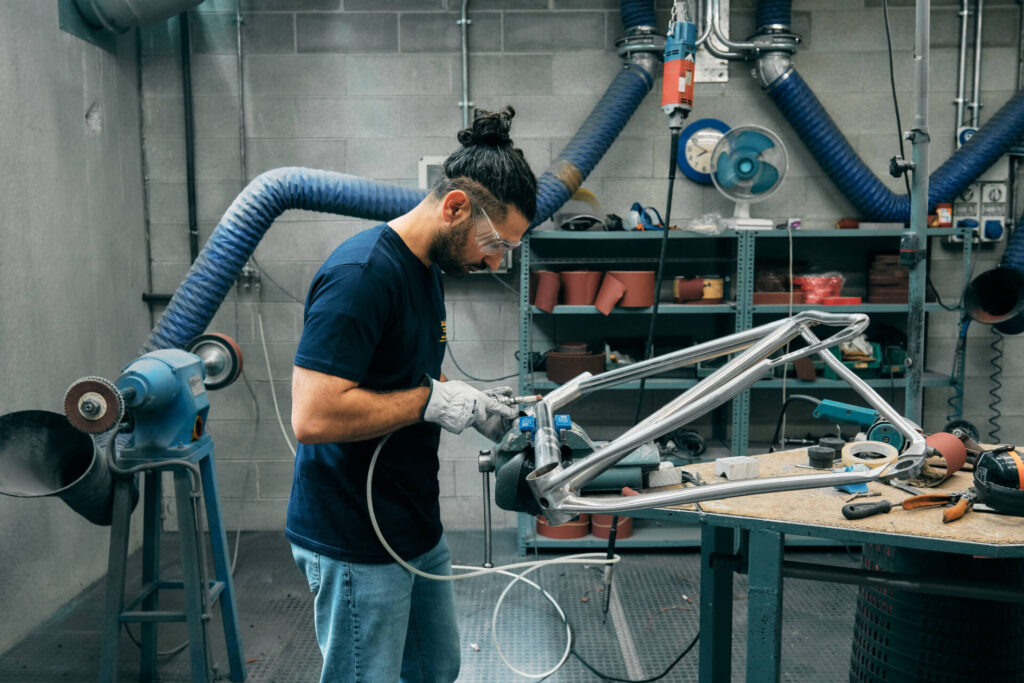
The choices that go into a Stelbel frame are far more numerous than one might expect. There’s the material — steel, stainless steel or titanium, each with its own distinct ride feel and handling character. There’s the model, its base geometry, then calibrated millimetre by millimetre to your body measurements and riding position. There’s the tyre clearance, which determines the kind of tyres you can run and, in turn, the kind of roads you can truly explore. There are the mounts and provisions for components and accessories — the functional details that make the difference in everyday use. And there’s the aesthetic: the paintwork, the finishes — the part of the bike that shows itself to the world, and, along the way, says something about you.

The bikes you find in a shop window, however beautiful they may be, follow a different logic. They’re industrial products designed for a broad audience, refreshed each season with new liveries and new collections because that’s how the market works. It’s a legitimate logic, and it’s the one that fuels much of the cycling world we all know. But a Stelbel frame comes into being the other way around: it doesn’t exist until you order it, and it doesn’t answer to a release calendar. It exists because you wanted it that way. It’s an act of intention, not a choice between preset options.
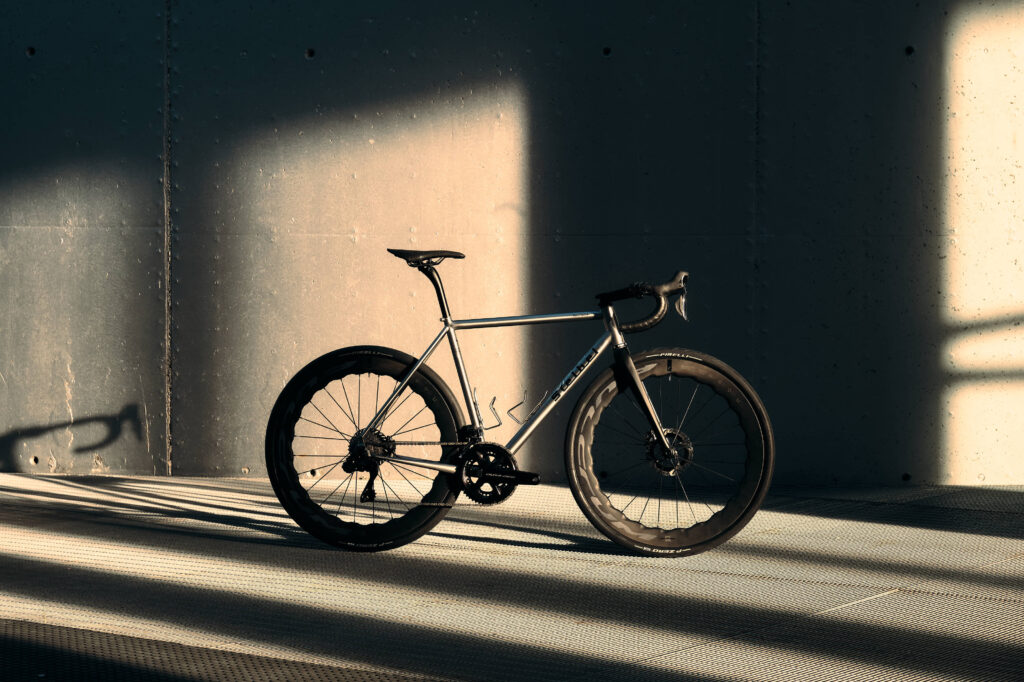
A Stelbel frame is a bicycle you keep. Some of the frames we’ve built are still ridden decades later, and it’s not uncommon for them to be passed down — an object made with one person in mind can become meaningful to whoever inherits it. It’s the intrinsic value of things made one at a time, the result of decades of refinements, trials and corrections. It isn’t a value we claim: it’s a value the frame proves over time.
In the end, what we deliver is a mirror. Not in the literal sense — there’s nothing narcissistic about a frame. In the sense that it reflects the person who wanted it: their measurements, their way of riding, their taste, their intentions. It’s an object that could never exist identically for anyone else, because no one else is quite like you. This, in the end, is what we’re interested in building — not bikes made in series, but bikes that complete the person who rides them.
We’ve tried to tell this story in images as well, in a short film we chose to call A Reflection of You.

