Stelbel’s approach to frame building: drawing, research, testing, and methodological choices that precede every frame.
There is a moment in frame building that comes long before the welder’s movement and the rasp of the file. It is the moment when you sit down in front of a blank sheet of paper, sketch an idea, put an intuition on paper, and decide whether a detail should be done this way rather than that. It is a quiet moment — and for anyone watching the workshop from the outside, an invisible one. Yet this is where the most important part of the craft is decided: the part that separates a good frame from a truly considered one.
Stelbel begins with that moment.
Craftsmanship as research
There is a romantic version of craftsmanship — the one of skilled hands, the inherited gesture, the tradition that repeats itself unchanged — that has served as the narrative backbone of many brands.
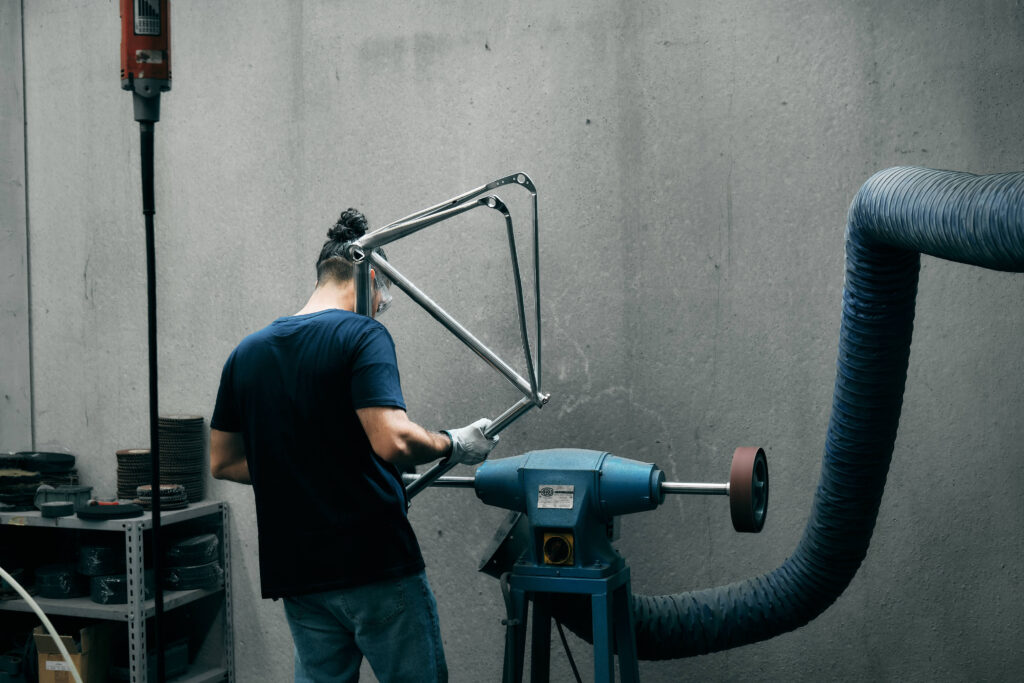
It is a true version, in part. But it is a partial one, because it leaves out the fact that every good craftsman, in any era, has also been a researcher. The techniques we now consider traditional are the accumulated result of generations of trial, error, and correction.Stelbel has always worked in close collaboration with mechanical engineers who are passionate cyclists and with talented designers, in a continuous dialogue between workshop experience and engineering analysis.
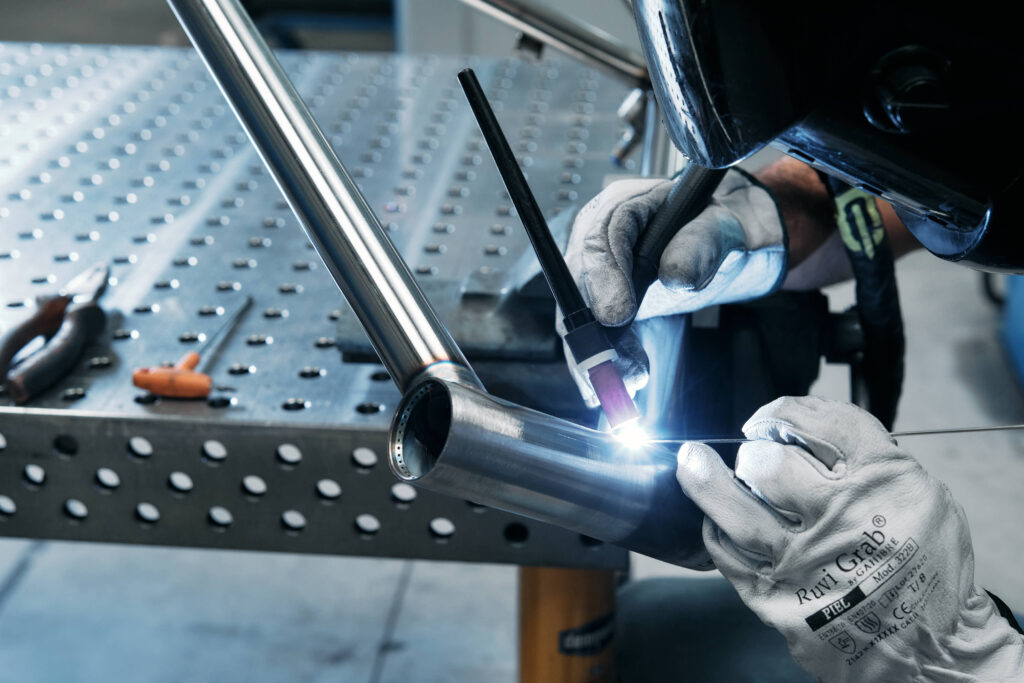
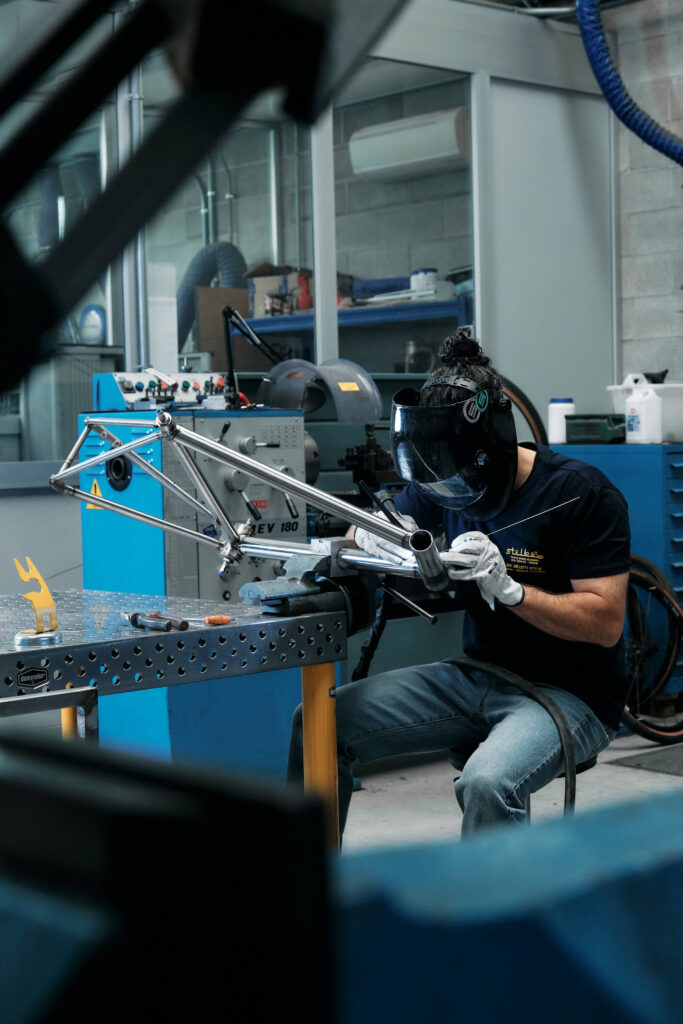
Technical drawings are developed using professional CAD software, stresses are verified through fatigue simulations, and every component that leaves the workshop has followed a documented process.To this is added a technical history that has always been ours: TIG welding. Stelio Belletti is recognised in the framebuilding world as the pioneer who first brought this technique to the construction of racing frames, at a time when it was anything but an obvious choice.
Today TIG welding is the modern benchmark of excellence for joining fine metals — but for us it never arrived as an innovation to be adopted. It is the method we have built with for decades, refined through work after work. It is a technique that demands not simply a steady hand, but the simultaneous command of countless machine variables and settings — current, gas, the geometry of the weld pool, travel speed — and in that command lies the difference between an acceptable weld and one of a superior level.

Seven generations of bottom bracket
One example speaks for all. The bottom bracket shell is one of the most critical points of a frame: it is where the forces of pedalling converge, the fulcrum that bears the full work of the rider. To study it well means directly influencing how the bicycle responds under load.
Stelbel introduced its first proprietary bottom bracket shell at the end of 2017, choosing the T47 standard when very few in Europe had done the same — among the very first builders to believe in it. Since then, the shell has been revised, recalculated, and redrawn seven times. Seven generations, one after the other, each born from what the previous had taught. Not because the previous version was wrong, but because it could be done better. This is the attitude we most want to convey: the idea that a component is never finished, but always in conversation with itself.
What we design
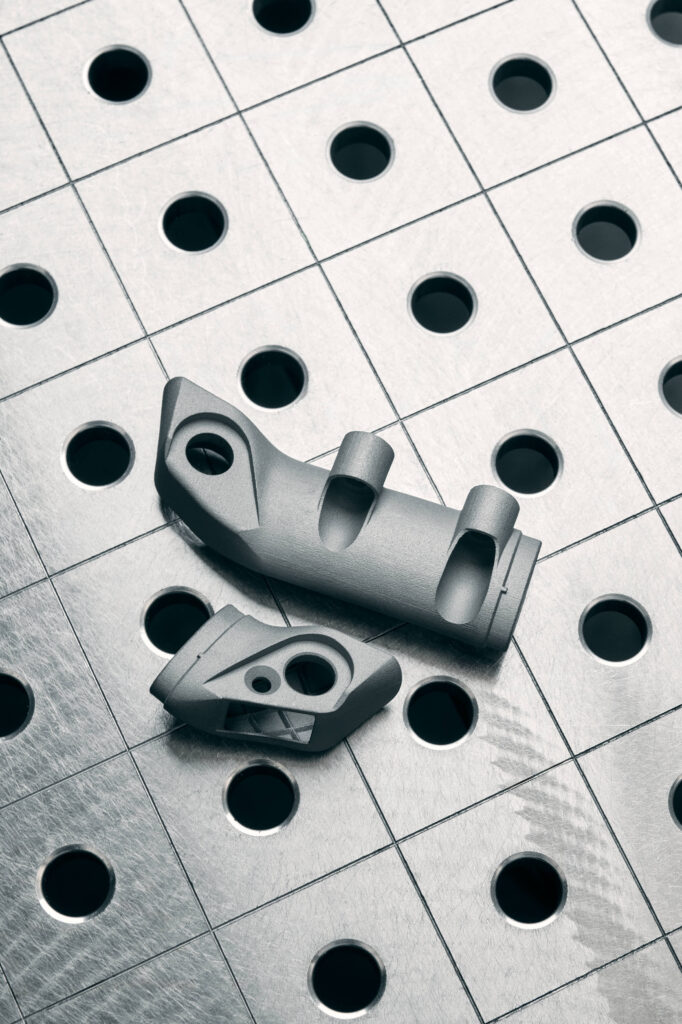
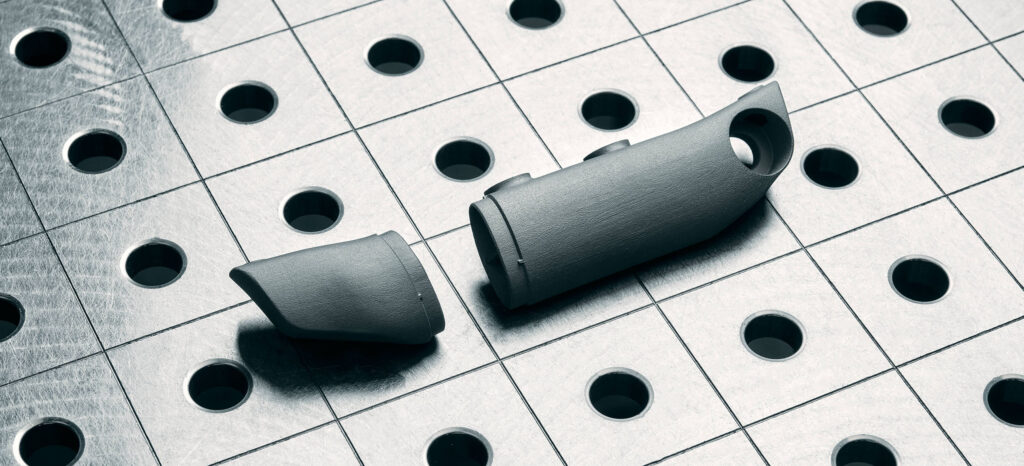
One consequence of this approach is that much of what goes onto our frames is born in-house. The seatpost clamp system and its hardware, the headset bearing cups, the bottom bracket shell already discussed, the CNC-machined dropouts and those produced by 3D printing: every detail is the result of a specific drawing, conceived for the frame it will be mounted on.
The most ambitious case is our in-house carbon fork — very few craftsmen in the world can claim a carbon fork designed entirely internally, and we have chosen to tell its story in a dedicated article. But even the less visible small parts are born from the same philosophy: when we find a component on the market that could be made better for our use, we redraw it. Not out of principle, and not out of pride — out of coherence with the frame as a whole.
Past and future in the same frame
Steel and titanium remain the materials we love to work with. They are the materials of the Italian framebuilding tradition, the ones on which the knowledge we continue to cultivate was formed, and it is on them that our design research is concentrated. The most recent tools — CAD, fatigue simulations, 3D printing where it serves a purpose — do not replace them. They serve them. They help carry them further.
A Stelbel frame is the sum of hundreds of decisions of this kind. Small decisions, often invisible to those who look at it from the outside — a bearing cup, the angle of a dropout, the way a bottom bracket manages localised stiffness. Taken together, they make the difference between a well-built bicycle and a thoughtfully designed one. That is the distinction we care about. And it is why we continue, generation after generation, to consider nothing we do ever truly finished.
Past and future in the very same frame.
Steel and titanium remain the materials we love to work with. They are the core of the Italian framebuilding tradition, the foundation of the knowledge we continue to cultivate, and the main focus of our design research. The latest tools—CAD, fatigue simulations, and 3D printing where necessary—do not replace them. They serve them. They help push them further.
A Stelbel frame is the sum of hundreds of decisions just like these. Small decisions, often invisible to the outside observer—the seating of a bearing, the angle of a dropout, the way a bottom bracket shell manages localized stiffness. Combined, they mark the difference between a well-built bicycle and a thoughtfully engineered one. This is the distinction that matters to us, and it is the reason why, generation after generation, we never consider anything we do to be truly finished.

